

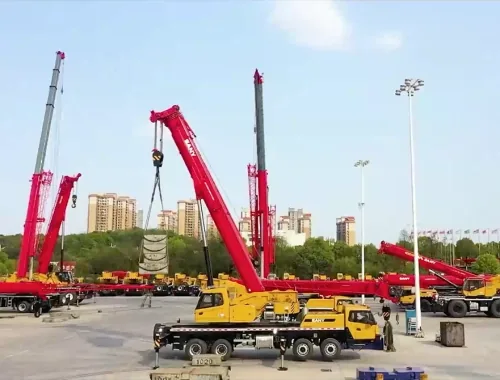
A tower crane is sized by the heaviest load at the radius where it must be placed, the jib length needed to cover the building, and the height under the hook. Beyond the monthly rent, budget for erection, dismantling, the foundation, power supply and any climbing or tie-ins, because these are usually separate items.
- Read the crane's load chart at your furthest placement radius, not its maximum capacity close in.
- Erection, dismantling and the foundation are one-time items, separate from the monthly rent.
- Tower cranes run on electricity: the site normally provides a dedicated power supply.
Sizing the crane
- Load at radius. Like any crane, a tower crane lifts most close to the mast and least at the jib tip. List the heaviest loads (bucket of concrete, rebar bundles, formwork panels, precast elements) and where each must go.
- Jib length. The jib must reach every point you need to serve from the crane's position, including material unloading areas.
- Height under hook. Allow for the finished building height, the load and its rigging, and clearance. If the building rises beyond the crane's free-standing height, the crane will need climbing and tie-ins to the structure.
- Flat-top or luffing. Flat-top cranes suit open sites. Luffing-jib cranes raise the jib to stay inside a tight site or avoid swinging over neighbouring property.
What the quote should separate
| Item | Who usually arranges it |
|---|---|
| Monthly rent of the crane | Supplier |
| Erection (first time) and dismantling | Usually separate one-time charges |
| Support crane and labour for erection | Varies: check the quote |
| Foundation design and casting | Usually customer's scope, to the supplier's foundation drawing |
| Counterweights / ballast | Varies: check the quote |
| Power supply to the crane | Usually customer's scope |
| Operator and signalman | Varies: check hours and shifts |
| Shifting on site, climbing, tie-ins | Usually charged each time |
"Usually" means what quotes commonly say; each supplier states it in their quote on Clexen, so you can compare line by line.
Timeline and site readiness
The foundation needs time to be designed, cast and cured before erection, and erection needs a mobile crane, access and a clear area. Ask the supplier for their foundation drawing early, and agree the erection date only once the foundation is ready.
Documents to ask for
- The load chart for the crane and jib length offered.
- Foundation drawing and loads.
- Test and inspection certificates, and the operator's competence certificate.
For capacity basics that apply to every crane, see our guide on choosing crane capacity and reading load charts.
When you know roughly what you need, request quotes on Clexen. Describe the lifting work and building height and suppliers near your site will propose the right size; you can also browse what is listed.
Frequently asked questions
What is included in tower crane rental?
Usually the crane itself for a monthly rent. Erection, dismantling, foundation, power supply and climbing are commonly separate items. Each quote on Clexen states who arranges what.
Who builds the tower crane foundation?
Usually the customer, to the supplier's foundation drawing, designed and checked by the project's structural engineer.
Does a tower crane need its own power supply?
Most tower cranes are electric and need a dedicated supply of the rating the supplier specifies. This is normally the site's scope.
When do I need a luffing-jib tower crane?
When the site is tight or the jib must not swing over neighbouring property or roads. A luffing jib raises up to reduce its swing radius.